About the Artist
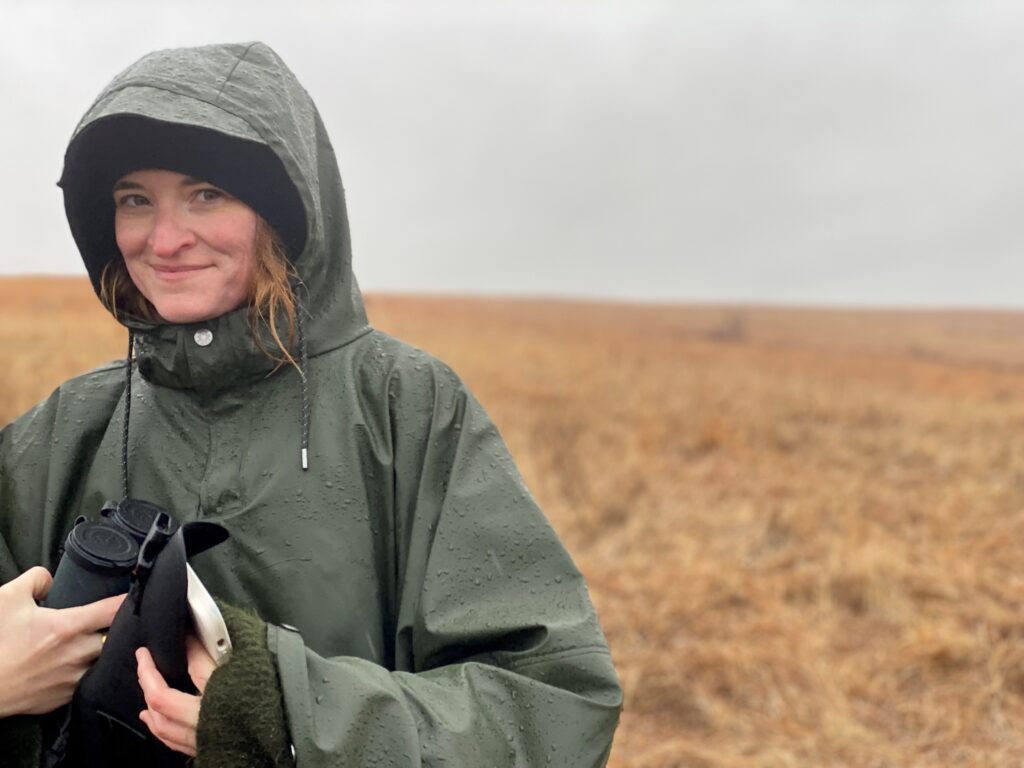
Sarah Kaizar is an illustrator and designer based in Philadelphia. Her work has been exhibited nationally in galleries and museums including the Burke Museum of Natural History and Culture at the University of Washington, the James A. Michener Art Museum, the Great Plains Art Museum at the University of Nebraska-Lincoln, the Catalina Museum of Art & History, the Woodmere Art Museum, and Delaware Contemporary. Sarah is the author of two books. HIKER TRASH: Notes, Sketches + Other Detritus on the Appalachian Trail is an illustrated work about long-distance backpacking culture. (Mountaineers Books, 2019) Her second book illustrates stories about North American bird conservation and citizen science and is titled RARE AIR: Endangered Birds, Bats, Butterflies and Bees. (Mountaineers Books, 2023) This title was recognized as a finalist for Foreword’s INDIES 2023 Book of the Year in the Ecology and Environment category.
Sarah’s practice has been supported by awards including grants from the Joseph Robert Wood Foundation and the Puffin Foundation. She was honored as an inaugural Wind Fellow by InLiquid and the Dina Wind Foundation and was awarded a residency at the Cedar Point Biological Station at the University of Nebraska-Lincoln. She is currently represented by Paradigm Gallery.
Sarah has served as a designer for a variety of design and cultural organizations in the Greater Philadelphia area including KieranTimberlake, the Wharton Esherick Museum, WHYY, the Science History Institute, the Museum for Art in Wood, and the Conserve Wildlife Foundation of New Jersey. She currently serves as the Art Director for the Pennsylvania Horticultural Society. Sarah is a member of the Board of Directors for Bartram’s Garden in Philadelphia as well as an Affiliate Fellow at the Center for Great Plains Studies at the University of Nebraska-Lincoln. She is also the author of the Webby Award Honored series the AT Feed, a satirical illustrated project examining the confluence of news media, artificial intelligence, and public understanding (or misunderstanding) of current issues regarding nature, the environment, and climate change.